AGA Data Shows Modest NFL Betting Projections for 2026 Season
Dana Hansen · Sep 7, 2026

AGA Data Shows Modest NFL Betting Projections for 2026 Season
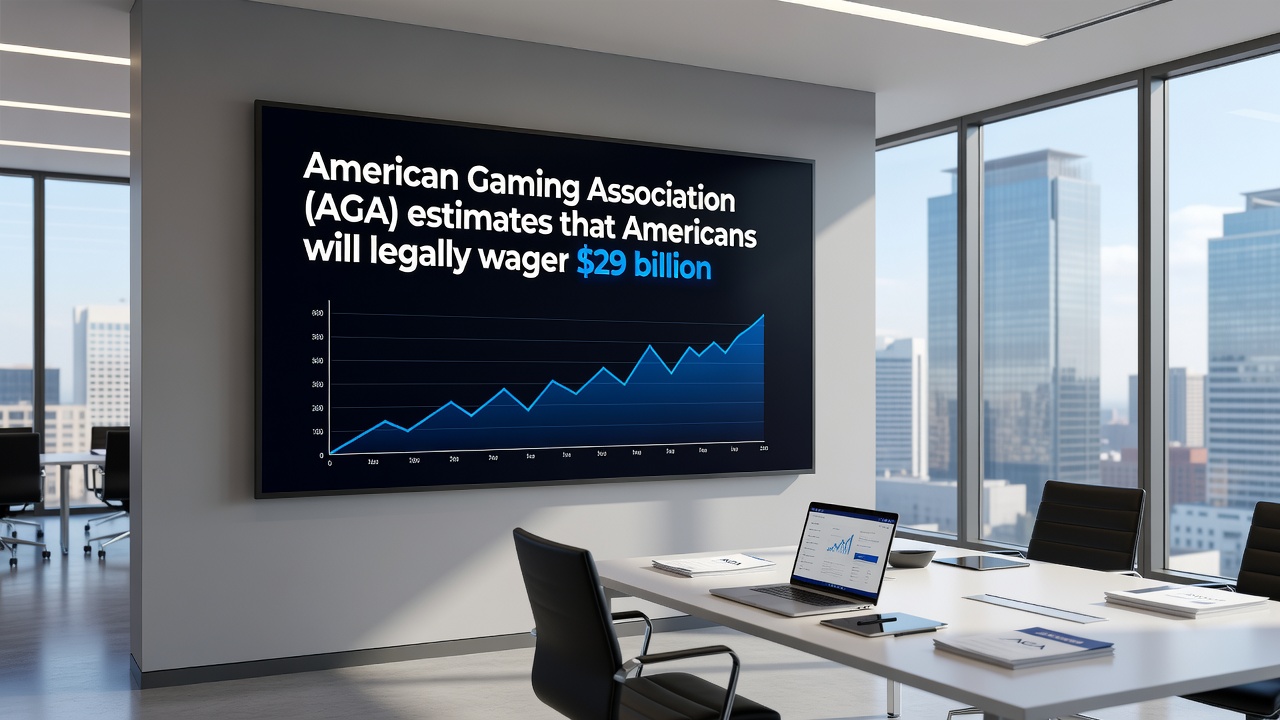
The American Gaming Association has released projections indicating Americans will place $29.5 billion in legal wagers on the 2026 NFL season through regulated commercial sportsbooks, a figure that reflects a 0.3 percent increase from the $29.4 billion recorded in the prior season. This minimal year-over-year change marks the smallest growth rate observed since federal legalization took effect in 2018. Observers note the slowdown aligns with maturing markets in several states where sportsbooks have operated for multiple years.
Breakdown of the Latest Projections
Figures from the AGA report detail how regulated sportsbooks continue to generate substantial handle despite the tempered growth trajectory, and data points to sustained contributions toward state tax revenues along with employment in the gaming sector. The estimates cover the full 2026 NFL campaign, which begins in September 2026, and they account for both in-person and mobile betting activity across jurisdictions with active commercial frameworks. Those who track industry metrics highlight that the overall volume remains elevated compared with earlier post-legalization seasons even as the pace of expansion has eased.
Competition from Prediction Markets
Prediction markets such as Kalshi and Polymarket have expanded access to sports-related contracts in states without traditional sportsbooks, and this development coincides with the flat growth pattern in regulated channels. The AGA analysis indicates these platforms are positioned for stronger expansion in the coming period because they operate under different regulatory structures that allow nationwide participation in certain event contracts. Data shows potential tax revenue shifting away from state coffers that rely on commercial sportsbook activity, while legal operators maintain support for local jobs and regulatory compliance frameworks.
Researchers tracking market dynamics point out that prediction market volumes have risen sharply in recent cycles, drawing participants who previously used regulated sportsbooks or who reside in areas without legalized betting. This shift creates a parallel channel for sports event contracts that bypasses the tax and licensing requirements applied to commercial operators. The report notes this trend without assigning causation but documents the divergence in projected growth rates between the two segments.
Revenue and Employment Context
Legal sportsbooks continue to remit taxes to states that have authorized commercial operations, and the AGA projections underscore ongoing economic contributions from this sector even amid slower handle growth. Figures reveal that employment tied to sportsbook operations and related services has stabilized in mature markets, whereas newer jurisdictions still experience incremental job creation as additional licenses come online. The report connects these outcomes directly to the regulatory environment established after 2018, when states began implementing frameworks for commercial sports wagering.
Those monitoring revenue trackers observe that the $29.5 billion projection for 2026 sits within a broader pattern of decelerating expansion across multiple sports leagues, not solely the NFL. Market saturation in early-adopter states, combined with the rise of alternative platforms, appears in the data as a contributing factor to the reduced growth rate. The analysis stops short of forecasting future seasons yet supplies the baseline numbers against which subsequent reports will be measured.
Regulatory and Market Implications
State regulators continue to oversee commercial sportsbooks through licensing, taxation, and consumer protection rules, and the AGA data illustrates how these frameworks generate measurable fiscal returns. Prediction markets, operating under separate commodity or event-contract rules, fall outside many of these state-level mechanisms, which leads to the noted difference in revenue capture. The report presents this distinction as a factual development within the evolving landscape rather than a policy recommendation.
Industry participants who review the AGA estimates can compare the 0.3 percent increase against prior seasons that posted double-digit gains immediately following legalization. This comparative context shows the current projections represent a maturation phase rather than an outright contraction, with absolute dollar volumes holding near record levels. The data further separates NFL-specific wagering from other sports and from non-sports event contracts available on prediction platforms.
Conclusion
The AGA projections establish a clear numerical baseline for legal NFL wagering in 2026 while documenting the concurrent expansion of prediction markets that operate across state lines. These figures, drawn from industry modeling, provide a reference point for understanding how regulated sportsbooks and alternative platforms coexist within the current national framework. The report remains accessible through the association's resources for those seeking additional detail on commercial gaming revenue trends.